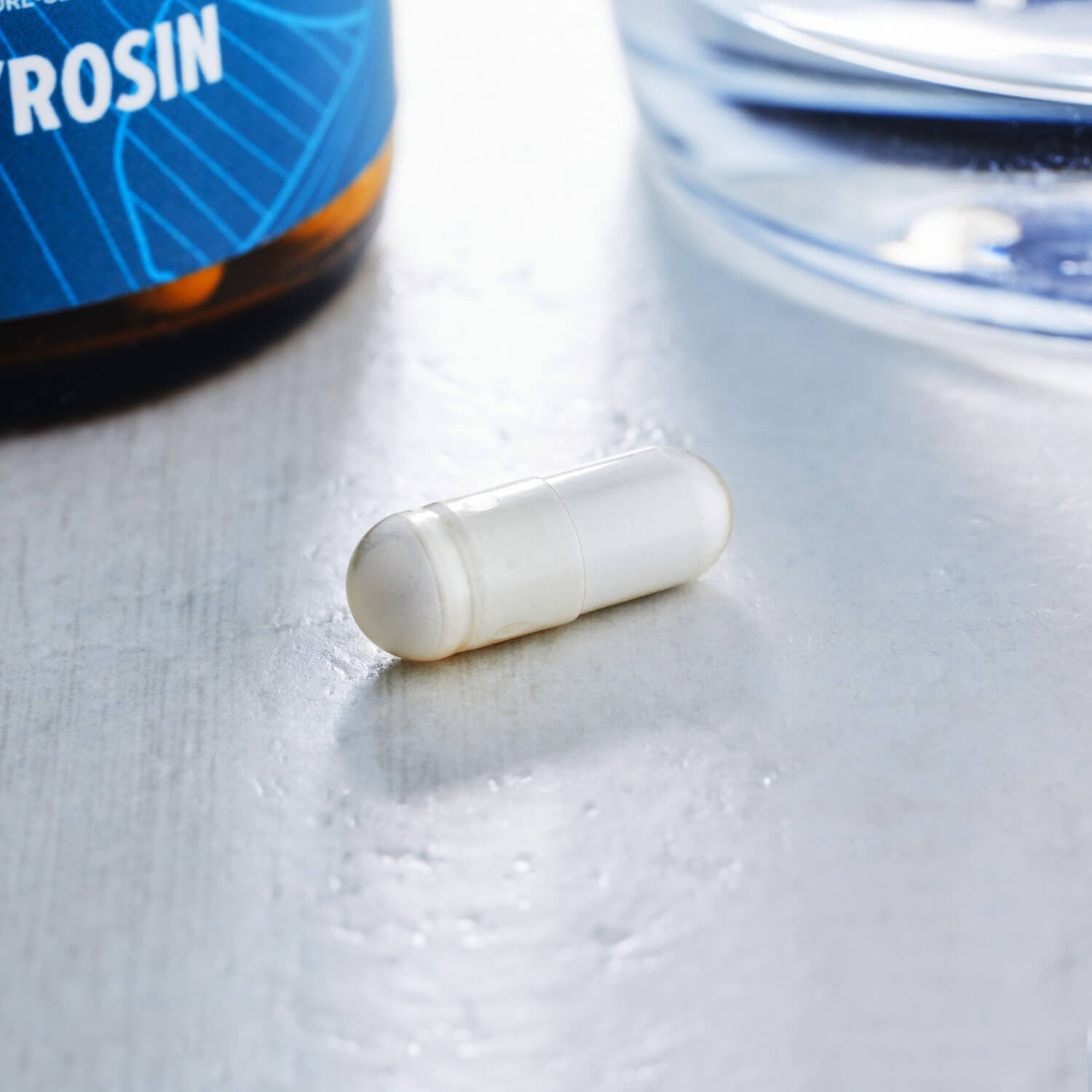

PURE L-Tyrosine Capsules
PURE L-Tyrosine Capsules
WE.FIT
Zugerstrasse 162
8820 Wädenswil
Switzerland
 Dokumente
Laboranalysen sind in unserer Datenbank (hier klicken!) zu finden.
Why L-Tyrosine?
L-Tyrosine or Tyrosine – not to be confused with the thyroid hormone Thyroxine – is one of the 20 standard amino acids used by cells for the synthesis of proteins. It is a non-essential amino acid. The word "Tyrosine" comes from the Greek tyrós, which means cheese, as it was first discovered in 1846 by German chemist Justus von Liebig in the protein casein from cheese.
Classically, L-Tyrosine is present in many protein-rich foods, such as chicken, turkey, fish, milk, yoghurt, cottage cheese, cheese, peanuts, almonds, pumpkin seeds, sesame seeds, soy products and lima beans, but also in avocados and bananas. For example, the protein of one egg contains about 250 mg per egg, whilst lean meat contains about 1 g per serving.
Tyrosine has several roles in the body's metabolism.
- Tyrosine contains a so-called phenol group as a side chain of the amino acid. Tyrosine is incorporated into proteins that serve signal transmission in cells. This is because tyrosine residues in the protein can be provided with a phosphate group (on the hydroxyl group) by certain enzymes, which is called phosphorylation. This tyrosine phosphorylation is considered one of the most important steps in signal transmission and the regulation of enzymatic activities.
-
In the brain and in the CNS, tyrosine is converted by the enzyme tyrosine hydroxylase (TH) into L-DOPA and then further into dopamine, noradrenaline and adrenaline. In this way, tyrosine is the basic building block for the formation of catecholamines, which play an important role as neurotransmitters and hormones.
- Furthermore, the amino acid is also the basic building block of the thyroid hormones triiodothyronine (T3) and thyroxine (T4), which are also formed in the thyroid from tyrosine.
- Tyrosine is also the precursor of the pigment melanin (e.g. skin tanning).
- Tyrosine is required for the synthesis of the benzoquinone structure, which is a component of Coenzyme Q10.
As a precursor of neurotransmitters, tyrosine can increase the concentration of neurotransmitters (particularly dopamine and noradrenaline), but according to studies, in normal individuals it has only slight or no effects on mood. In a series of studies, it was found that tyrosine is beneficial under stress, cold, fatigue (in mice), prolonged work and sleep deprivation, with studies in animals showing a reduction in stress hormone levels, a reduction in stress-induced weight loss, and in human studies an improvement in cognitive and physical performance.
Tyrosine appears to have no significant effects on cognitive or physical performance under normal circumstances, but it does help maintain working memory better during multitasking. Therefore, tyrosine is also known as the "amino acid of creativity" and the "amino acid of drive".
Tyrosine Capsules from the PURE Range
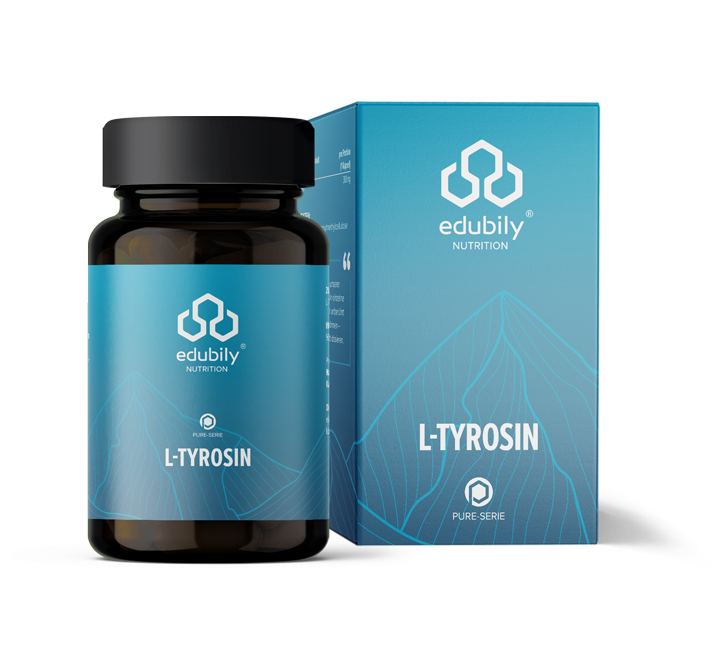
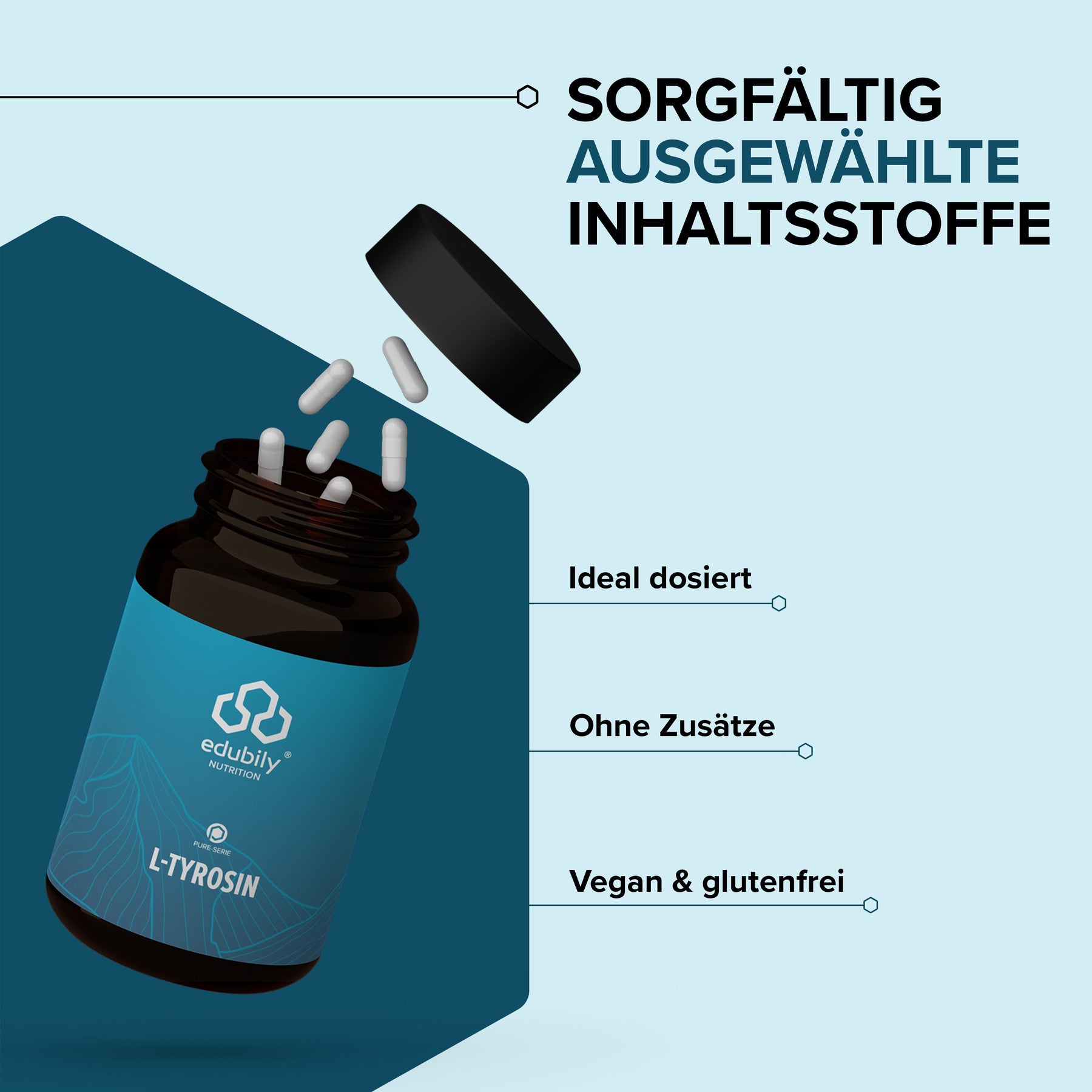
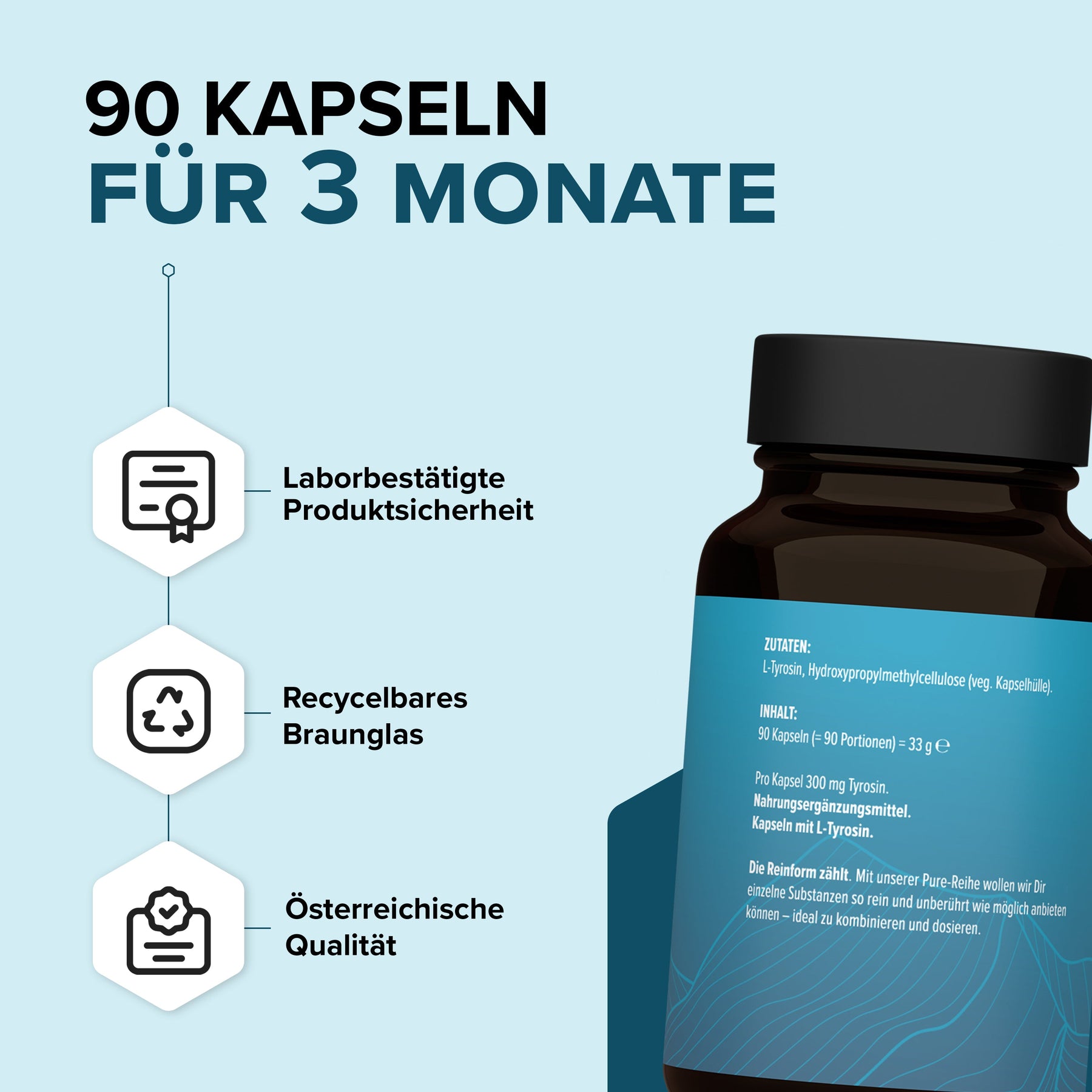
As with all products in our PURE Range, our Tyrosine Capsules contain only what is on the label: tyrosine. We dispense with magnesium stearate, titanium dioxide and similar additives – in a vegetable capsule shell.
Furthermore, it is pleasantly dosed at 300 mg per capsule.
Cf. Literature
Chinevere TD, Sawyer RD, Creer AR, Conlee RK, Parcell AC (November 2002). "Effects of L-tyrosine and carbohydrate ingestion on endurance exercise performance". Journal of Applied Physiology. 93 (5): 1590–7.
Deijen JB, Wientjes CJ, Vullinghs HF, Cloin PA, Langefeld JJ (January 1999). "Tyrosine improves cognitive performance and reduces blood pressure in cadets after one week of a combat training course". Brain Research Bulletin. 48 (2): 203–9.
Deijen JB, Orlebeke JF (1994). "Effect of tyrosine on cognitive function and blood pressure under stress". Brain Research Bulletin. 33 (3): 319–23.
Hao S, Avraham Y, Bonne O, Berry EM (February 2001). "Separation-induced body weight loss, impairment in alternation behaviour, and autonomic tone: effects of tyrosine". Pharmacology, Biochemistry, and Behaviour. 68 (2): 273–81.
Leathwood PD, Pollet P (1982). "Diet-induced mood changes in normal populations". Journal of Psychiatric Research. 17 (2): 147–54.
Lieberman HR, Corkin S, Spring BJ, Wurtman RJ, Growdon JH (August 1985). "The effects of dietary neurotransmitter precursors on human behaviour". The American Journal of Clinical Nutrition. 42 (2): 366–70.
Magill RA, Waters WF, Bray GA, Volaufova J, Smith SR, Lieberman HR, et al. (August 2003). "Effects of tyrosine, phentermine, caffeine D-amphetamine, and placebo on cognitive and motor performance deficits during sleep deprivation". Nutritional Neuroscience. 6 (4): 237–46.
Mahoney CR, Castellani J, Kramer FM, Young A, Lieberman HR (November 2007). "Tyrosine supplementation mitigates working memory decrements during cold exposure". Physiology & Behaviour. 92 (4): 575–82.
Neri DF, Wiegmann D, Stanny RR, Shappell SA, McCardie A, McKay DL (April 1995). "The effects of tyrosine on cognitive performance during extended wakefulness". Aviation, Space, and Environmental Medicine. 66 (4): 313–9.
Rasmussen DD, Ishizuka B, Quigley ME, Yen SS (October 1983). "Effects of tyrosine and tryptophan ingestion on plasma catecholamine and 3,4-dihydroxyphenylacetic acid concentrations". The Journal of Clinical Endocrinology and Metabolism. 57 (4): 760–3.
Reinstein DK, Lehnert H, Wurtman RJ (December 1985). "Dietary tyrosine suppresses the rise in plasma corticosterone following acute stress in rats". Life Sciences. 37 (23): 2157–63.
Strüder HK, Hollmann W, Platen P, Donike M, Gotzmann A, Weber K (April 1998). "Influence of paroxetine, branched-chain amino acids and tyrosine on neuroendocrine system responses and fatigue in humans". Hormone and Metabolic Research. 30 (4): 188–94.
Thomas JR, Lockwood PA, Singh A, Deuster PA (November 1999). "Tyrosine improves working memory in a multitasking environment". Pharmacology, Biochemistry, and Behaviour. 64 (3): 495–500.
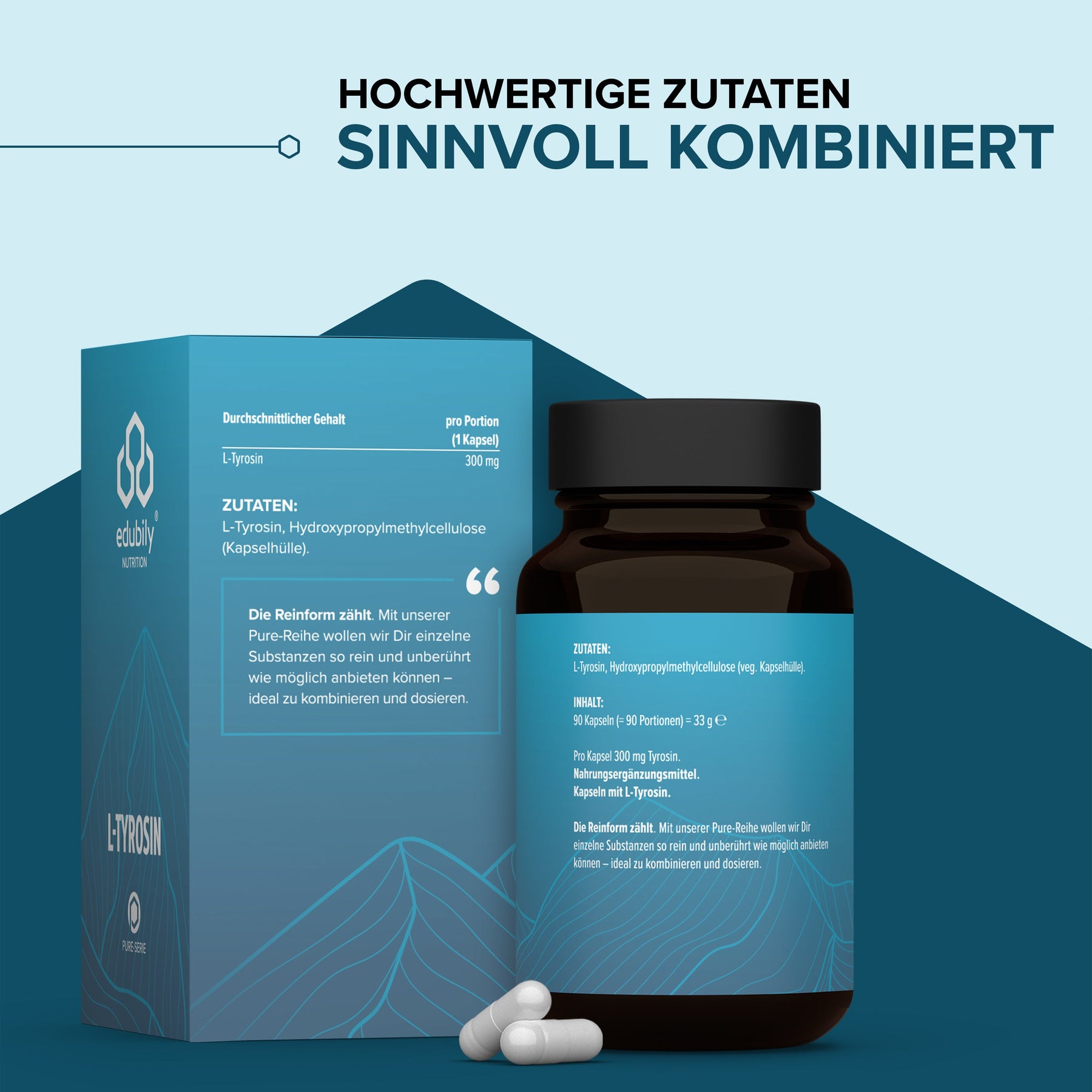
Durchschnittlicher Gehalt | pro Portion | % NRV* |
(= 1 Kapsel) | pro Portion | |
| L-Tyrosin | 300 mg | ** |
* Prozent der Nährstoffbezugswerte
** Keine Nährstoffbezugswerte vorhanden
Zutaten: L-Tyrosin, Hydroxypropylmethylcellulose (Kapselhülle).
VERZEHREMPFEHLUNG:
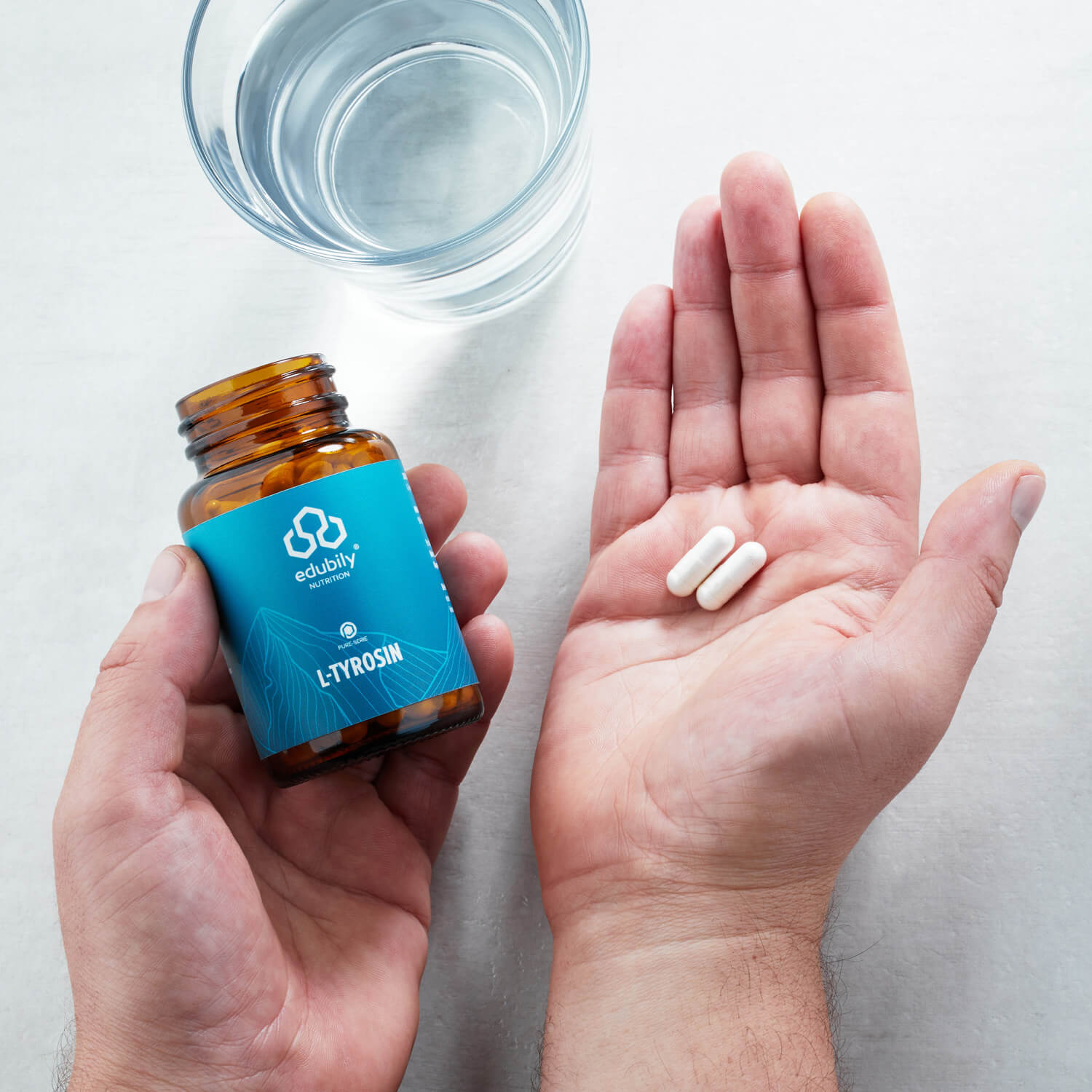
1 Kapsel täglich mit ausreichend Flüssigkeit einnehmen.
WICHTIGE HINWEISE:
Die angegebene empfohlene Tagesdosis darf nicht überschritten werden. Dieses Produkt ist kein Ersatz für eine ausgewogene und abwechslungsreiche Ernährung sowie eine gesunde Lebensweise.
Das Produkt eignet sich nicht für schwangere und stillende Frauen.
Außerhalb der Reichweite von kleinen Kindern aufbewahren.
Kühl, trocken und lichtgeschützt lagern.

Mit edubily® – Die Biochemie des Lebens verstehen
Mit dem Wissen aus der Biochemie wollen wir Menschen dabei helfen ihr volles Potential auszuschöpfen. Wir sind zwei Freunde, die es sich zum Ziel gesetzt haben, Menschen tiefe Einblicke in ihre Gesundheit zu geben. Wir wollen zeigen, dass es jedem von uns möglich ist, selbst etwas dafür zu tun, um möglichst lange gesund und fit zu bleiben. Aus unserer Sicht reicht es hierfür oft schon aus, wenn man bereit ist, Gesundheit verstehen zu lernen und sich gesund zu ernähren. Oft kommt es aber vor, dass in unserer modernen Ernährung wichtige Nahrungsstoffe fehlen. Deshalb liegt unser zweites Augenmerk auf der Entwicklung sinnvoller und vernünftiger, d. h., wirksamer Nahrungsergänzungsmittel.
Vielleicht auch interessant