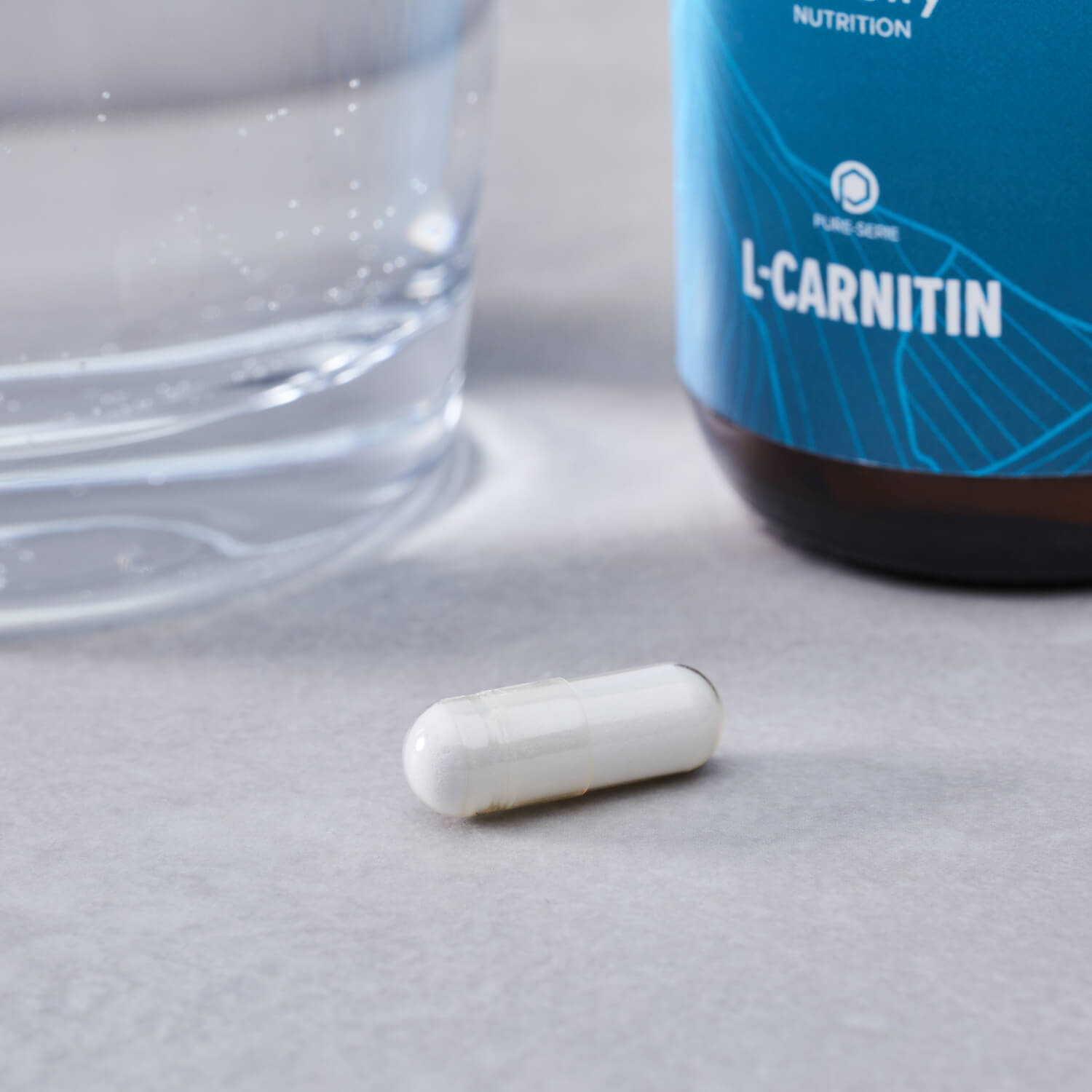

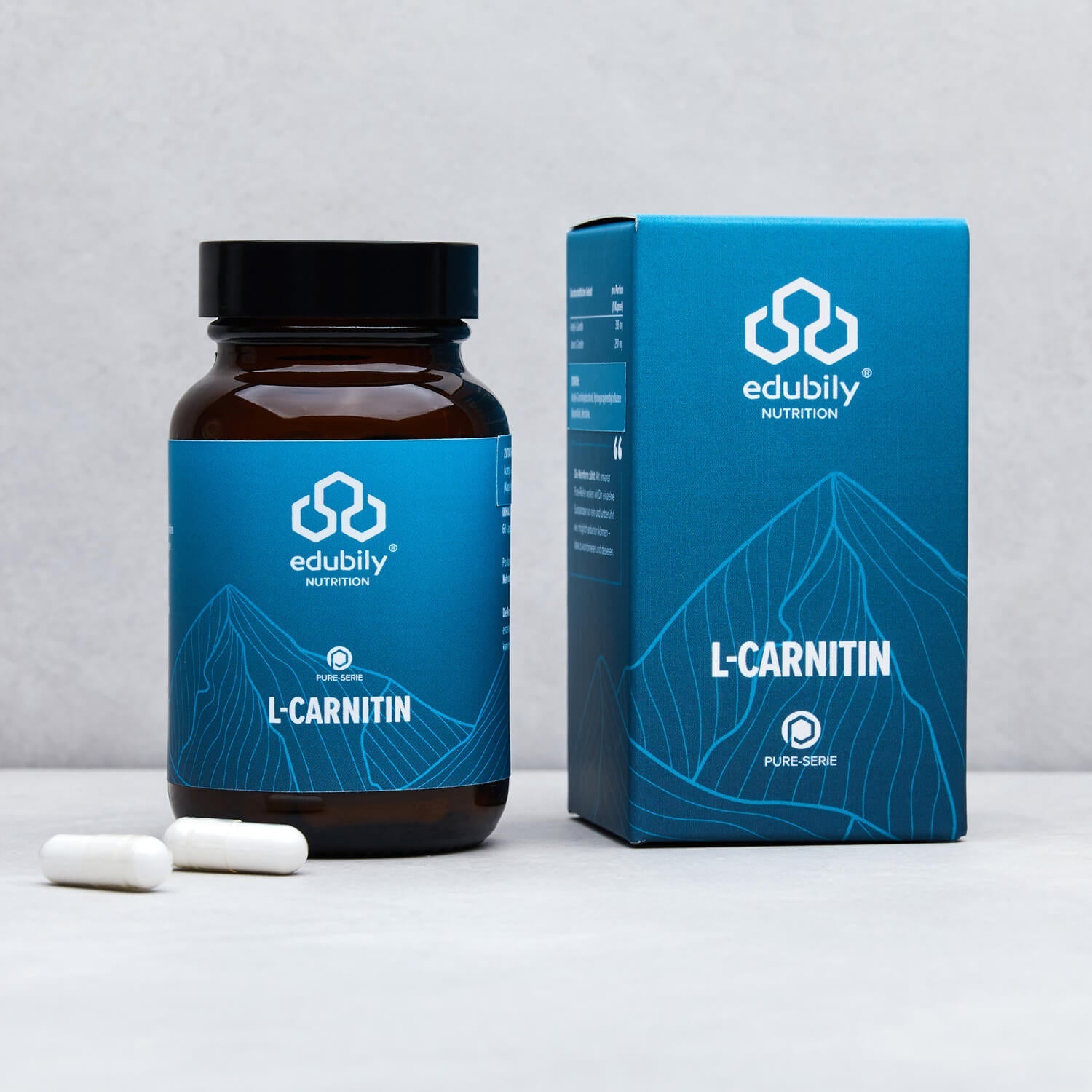
PURE L-Carnitine Capsules
PURE L-Carnitine Capsules
WE.FIT
Zugerstrasse 162
8820 Wädenswil
Switzerland
 Dokumente
What is L-Carnitine?
L-Carnitine (lat.: caro, carnis = flesh) is a substance of immense importance for metabolism ('vitamin-like'), which we obtain mainly through food despite the body synthesising approximately 10 to 20 mg per day. Carnitine is found mainly in red meat – lamb, beef and mutton can contain 100 mg per 100 g of meat. Those on mixed diets consume approximately 50 mg per day through food, whilst vegetarians' intake can drop to sometimes under 5 mg per day.
For the body's own synthesis, it requires the amino acids lysine and methionine, as well as Vitamin C, Vitamin B3, Vitamin B6 and iron. The body's synthesis capacity is sufficient on a mixed diet to prevent deficiency symptoms. However, a deficiency of the aforementioned substances can significantly reduce the amount of synthesised carnitine. Plant-based, meat-free diets can also quickly cause serious deficiency symptoms. Carnitine is known as an essential cofactor for metabolising fatty acids as energy carriers. Indeed, mitochondria require carnitine to transport long-chain fatty acids via carnitine palmitoyltransferase across the mitochondrial membrane. Only then can they serve as energy carriers.
Does L-Carnitine Increase Fat Burning?
Whether carnitine can increase fat burning in this way has been the subject of heated debate for years. Conclusive data on this does not exist. However, Müller et al. demonstrated nearly 20 years ago using radioactively labelled fatty acids that carnitine supplementation increased the oxidation of these fatty acids by 30 % (1). Fairly recent genetic research also shows that Europeans often have mutations in the carnitine transporter gene (OCTN2), which may increase the carnitine requirement in those people who carry these polymorphisms (2).
(1) Müller D et al. (2002) Effects of oral L-carnitine supplementation on in vivo long-chain fatty acid oxidation in healthy adults. Metabolism 51(11):1389–1391
(2) Urban T et al. (2006). Functional Genetic Diversity in the High-Affinity Carnitine Transporter OCTN2 (SLC22A5). Molecular Pharmacology, 70(5), 1602-1611. doi: 10.1124/mol.106.028126
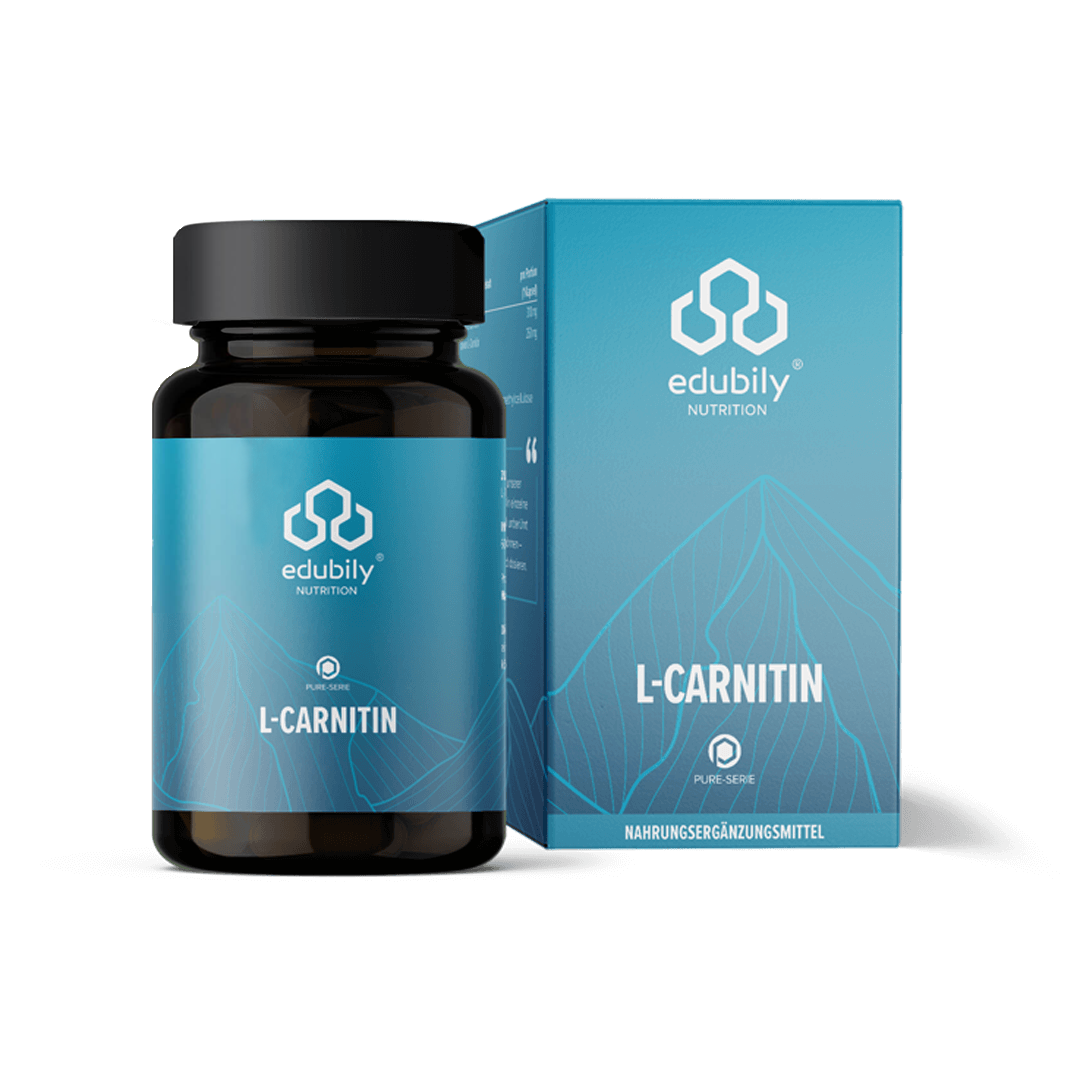
L-Carnitine Capsules from the PURE Range
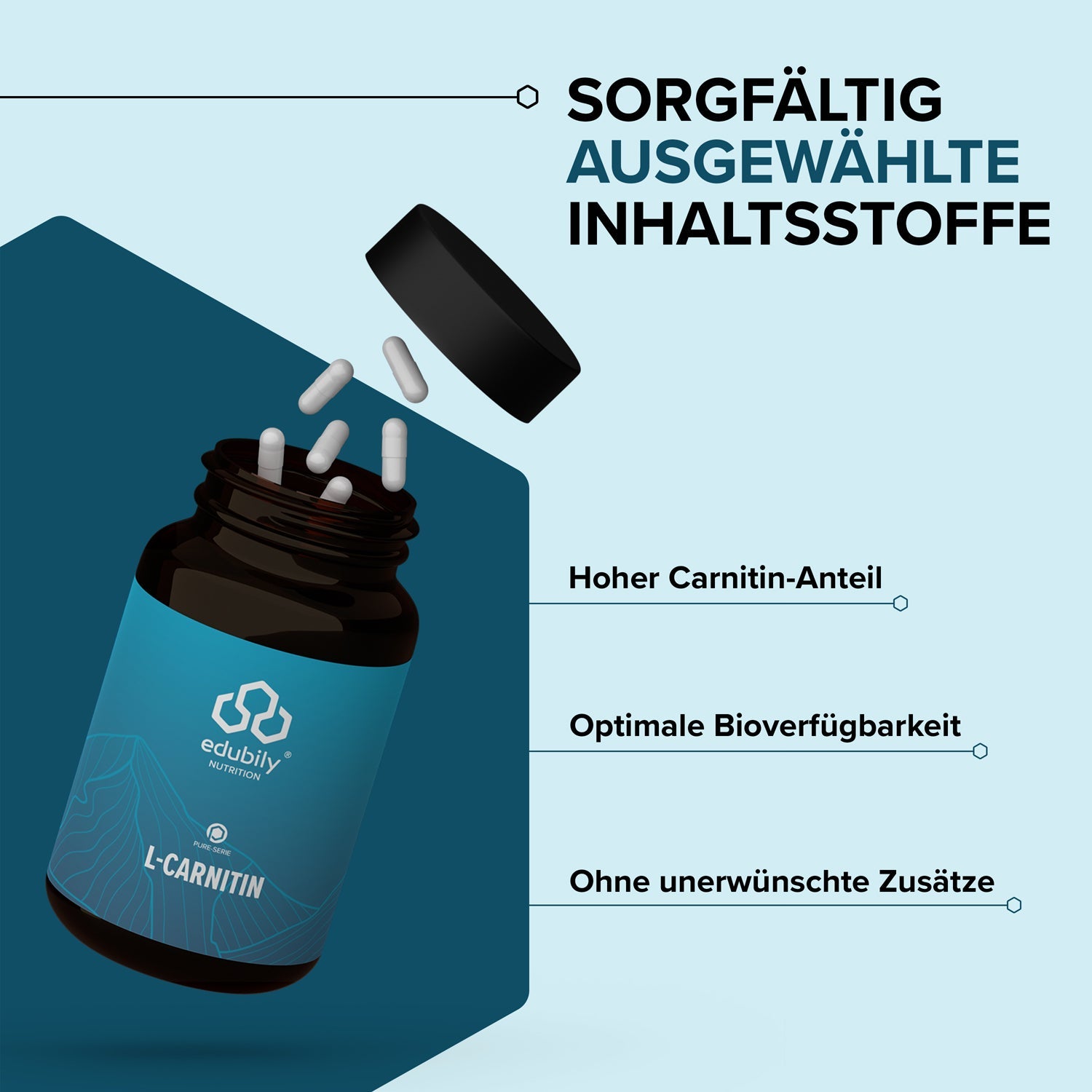
Our capsules contain Acetyl-L-Carnitine. Here carnitine is bound to an acetyl group, which is also found in the body in this form. The advantage is that this compound is said to have its own biological activity, but far more important: this compound is very well tolerated, extremely bioavailable and the carnitine proportion in the compound is very high because the acetyl group is small. This allows us to achieve optimal efficiency: the product is very well tolerated and ideally dosed.
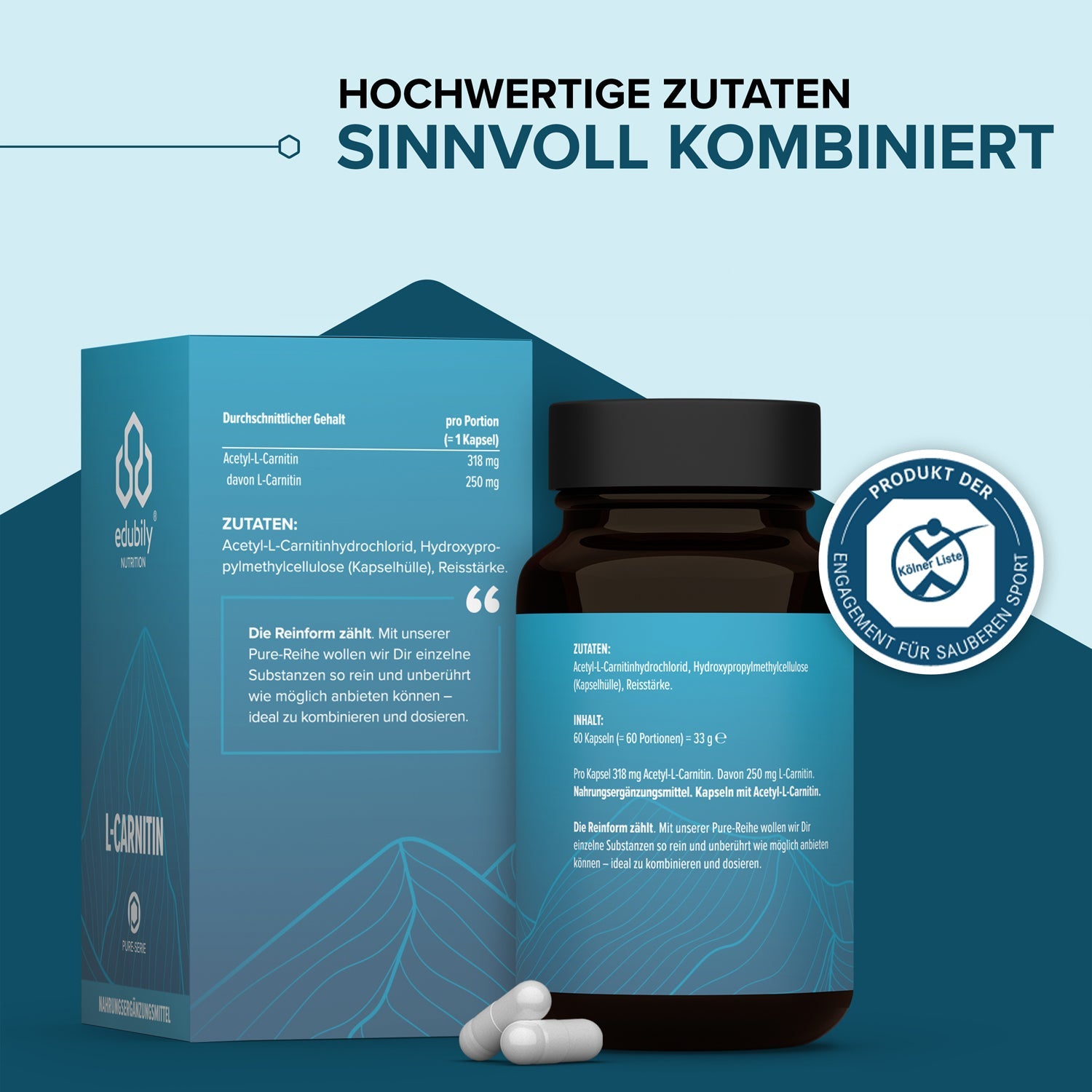
Durchschnittlicher Gehalt | pro Portion | % NRV* |
(= 1 Kapsel) | pro Portion | |
Sonstige Stoffe | ||
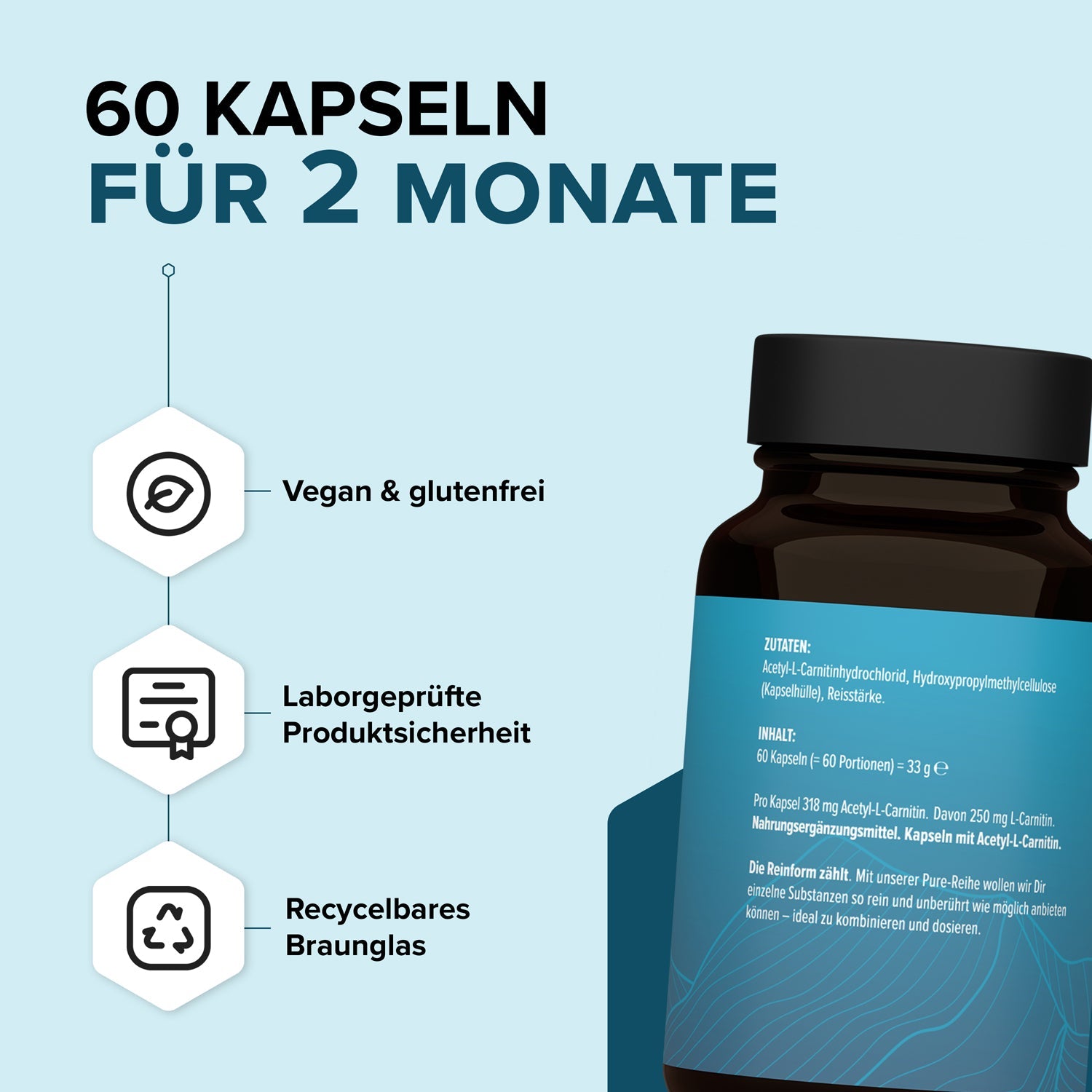
| Acetyl-L-Carnitin | 318 mg | ** |
| davon L-Carnitin | 250 mg | ** |
* Prozent der Nährstoffbezugswerte
** Keine Nährstoffbezugswerte vorhanden
Zutaten: Acetyl-L-Carnitinhydrochlorid, Hydroxypropylmethylcellulose (Kapselhülle), Reisstärke.
VERZEHREMPFEHLUNG:
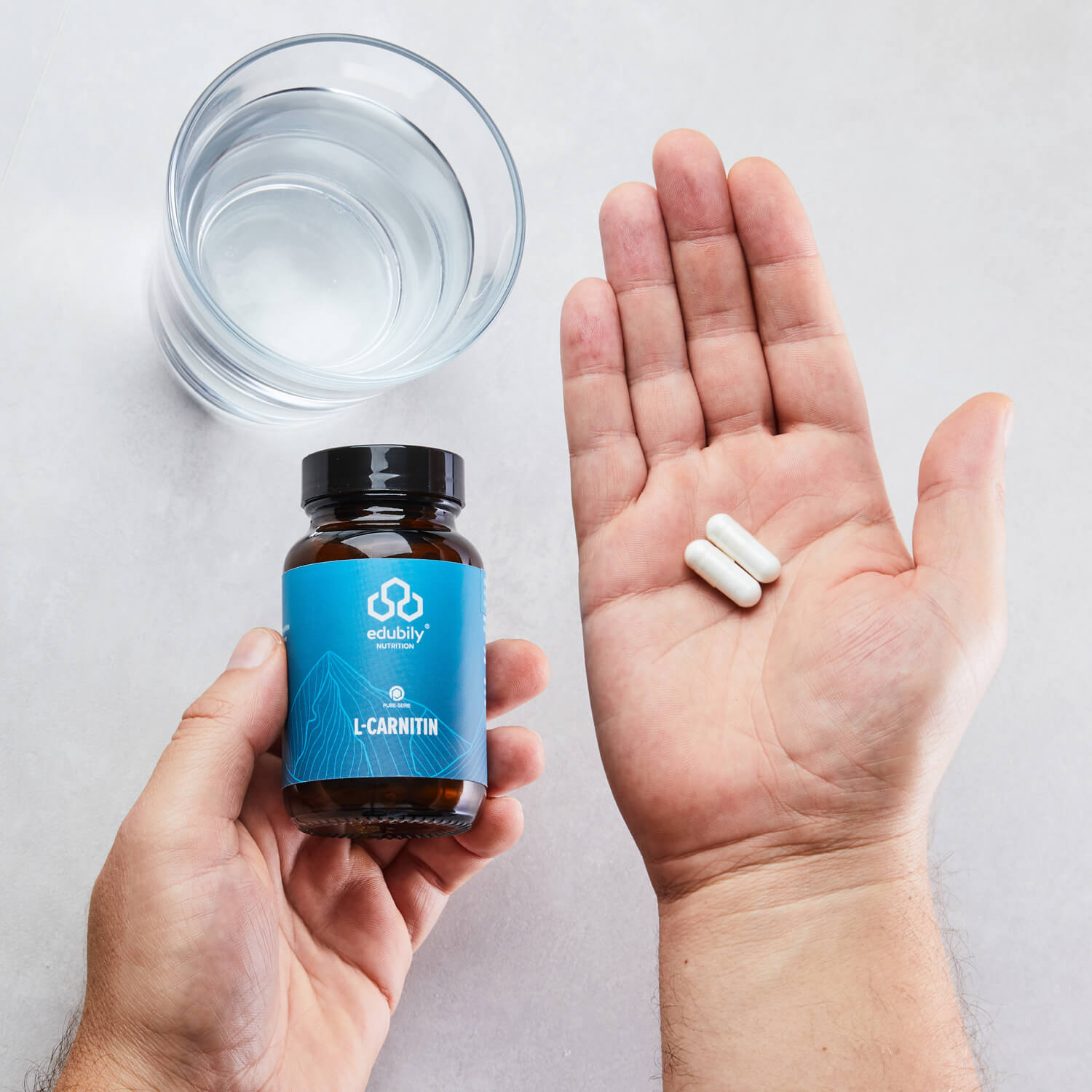
Täglich 1 Kapsel unzerkaut mit ausreichend Wasser schlucken.
WICHTIGE HINWEISE:
Die angegebene empfohlene Tagesdosis darf nicht überschritten werden. Dieses Produkt ist kein Ersatz für eine ausgewogene und abwechslungsreiche Ernährung sowie eine gesunde Lebensweise.
Außerhalb der Reichweite von kleinen Kindern aufbewahren.
Kühl, trocken und lichtgeschützt lagern.

Mit edubily® – Die Biochemie des Lebens verstehen
Mit dem Wissen aus der Biochemie wollen wir Menschen dabei helfen ihr volles Potential auszuschöpfen. Wir sind zwei Freunde, die es sich zum Ziel gesetzt haben, Menschen tiefe Einblicke in ihre Gesundheit zu geben. Wir wollen zeigen, dass es jedem von uns möglich ist, selbst etwas dafür zu tun, um möglichst lange gesund und fit zu bleiben. Aus unserer Sicht reicht es hierfür oft schon aus, wenn man bereit ist, Gesundheit verstehen zu lernen und sich gesund zu ernähren. Oft kommt es aber vor, dass in unserer modernen Ernährung wichtige Nahrungsstoffe fehlen. Deshalb liegt unser zweites Augenmerk auf der Entwicklung sinnvoller und vernünftiger, d. h., wirksamer Nahrungsergänzungsmittel.
Vielleicht auch interessant