Astaxanthin Capsules
Astaxanthin Capsules
60
WE.FIT
Zugerstrasse 162
8820 Wädenswil
Switzerland
 Dokumente
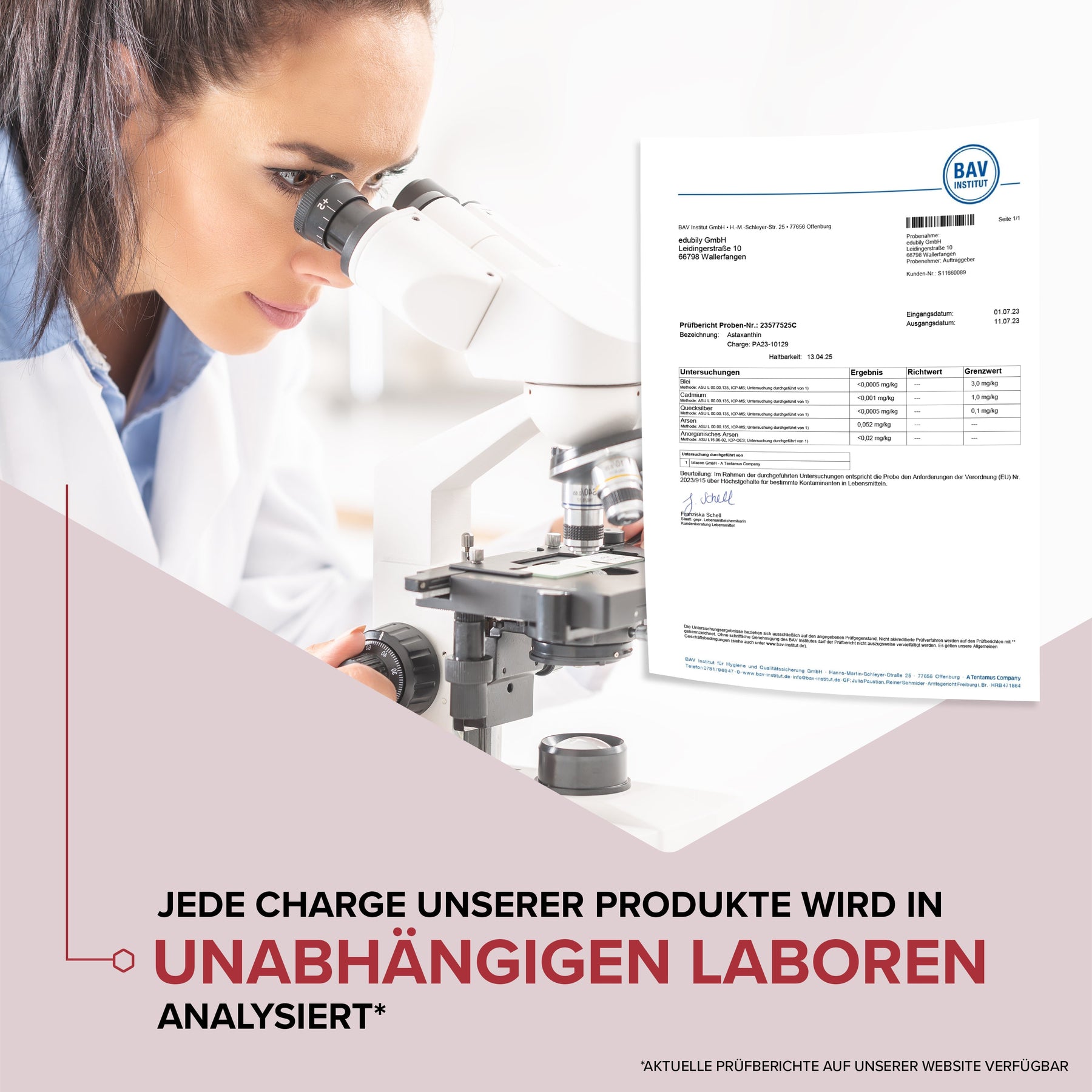
Laboranalysen sind in unserer Datenbank (hier klicken!) zu finden.
This is Astaxanthin
Astaxanthin, like β-carotene, lutein, zeaxanthin and lycopene, belongs to the carotenoids and was first discovered in 1942 in the shells of lobsters (Astacus gammarus). Carotenoids are primarily plant-derived, colour-giving pigments.
Astaxanthin is primarily biosynthesised by microalgae, phytoplankton, yeasts and bacteria and subsequently accumulates in zooplankton, crustaceans and later in various marine inhabitants, where it gives, amongst others, lobsters, salmon, prawns and flamingos – animals that occupy a higher position in the food chain – their characteristically reddish or pink-reddish colour.
In conventional human nutrition, both (wild) salmon and prawn are the main astaxanthin sources. Additionally, astaxanthin from the red alga Haematococcus pluvialis in the form of capsules or powder is also a significant astaxanthin source.
The Properties of Astaxanthin in Focus
Carotenoids in general are characterised by their antioxidative, i.e. radical-neutralising properties. Astaxanthin gained considerable recognition in this regard when a study by Nishida et al. (2007) showed that astaxanthin exhibits up to 6000-fold stronger antioxidative activity than vitamin C and up to 550-fold stronger activity than green tea in neutralising so-called singlet oxygen – a type of oxygen radicals.
Overall, astaxanthin demonstrated the strongest singlet oxygen-neutralising capability amongst the compounds tested in this study, as it showed superior properties under all three different conditions.
Since then, astaxanthin has been considered the "King of Carotenoids". This is due, not least, to the fact that it, like other carotenoids, accumulates amongst others in cell membranes and protects the fatty acids contained therein from peroxidation – the decisive difference, however, is that astaxanthin shows little or no auto-oxidation, meaning its radical-neutralising capability does not become exhausted.
Additionally, potent anti-inflammatory properties of astaxanthin have been described in scientific literature, amongst others in the form of COX-2 inhibition (forms pro-inflammatory messengers), which could be attributed to its potent radical-neutralising capability. (Cf. Chang & Xiong 2020)
Furthermore, astaxanthin can apparently cross the blood-brain and blood-retina barriers and function as an antioxidant there. (Cf. Si & Zhu 2022, Yang & Wang 2022)
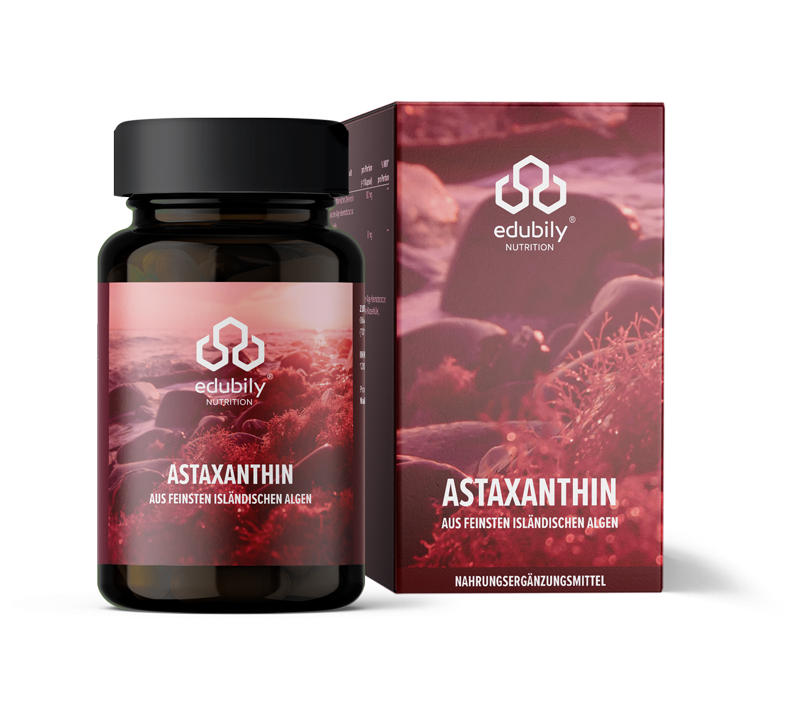
Algalif® Astaxanthin Capsules from edubily®
The algal species Haematococcus pluvialis is the richest natural source of astaxanthin. The alga produces astaxanthin in this case as a protection mechanism against stress conditions, such as sunlight exposure.
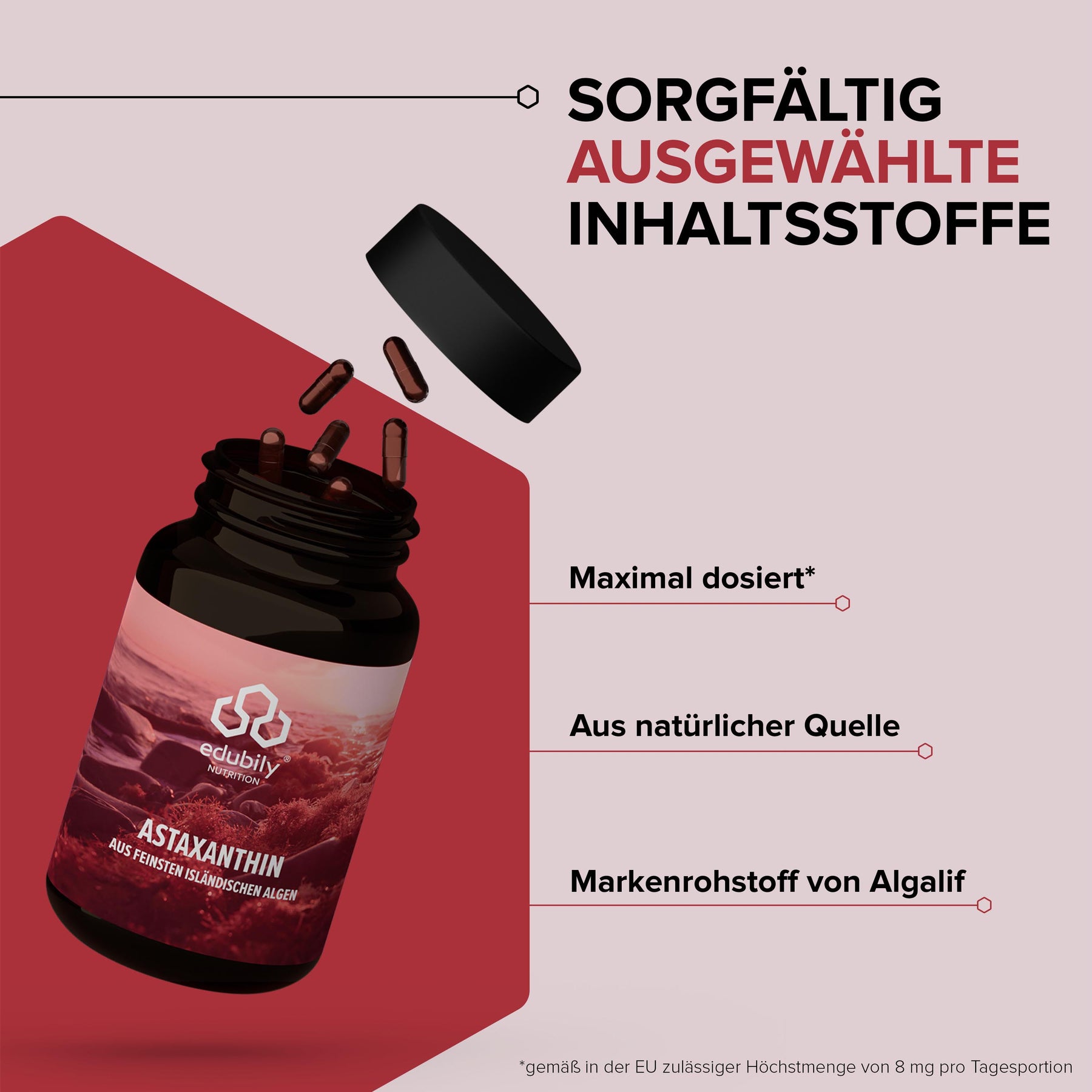
We source the branded raw material algalif® for our astaxanthin capsules from Iceland, as there are unique advantages there for the growth of Haematococcus pluvialis.
Algalif's unique closed photobioreactor cultivation system and its protected three-phase cultivation process ensure optimal growth of the microalgae and a high yield of pure astaxanthin from Haematococcus pluvialis.
In the Green Phase, the algal biomass is cultivated under optimal growth conditions with pure Icelandic water and high-quality nutrients to stimulate the algal cells to grow and reproduce. In the Starvation Phase and the Red Phase, the algal culture is exposed to stress conditions to stimulate astaxanthin synthesis.
The algal culture is harvested for further processing, i.e. dewatering and cell lysis. Finally, the astaxanthin is obtained through solvent-free supercritical CO2 extraction.
Furthermore, Iceland's unique geothermal resources enable energy-efficient and sustainable production of astaxanthin.
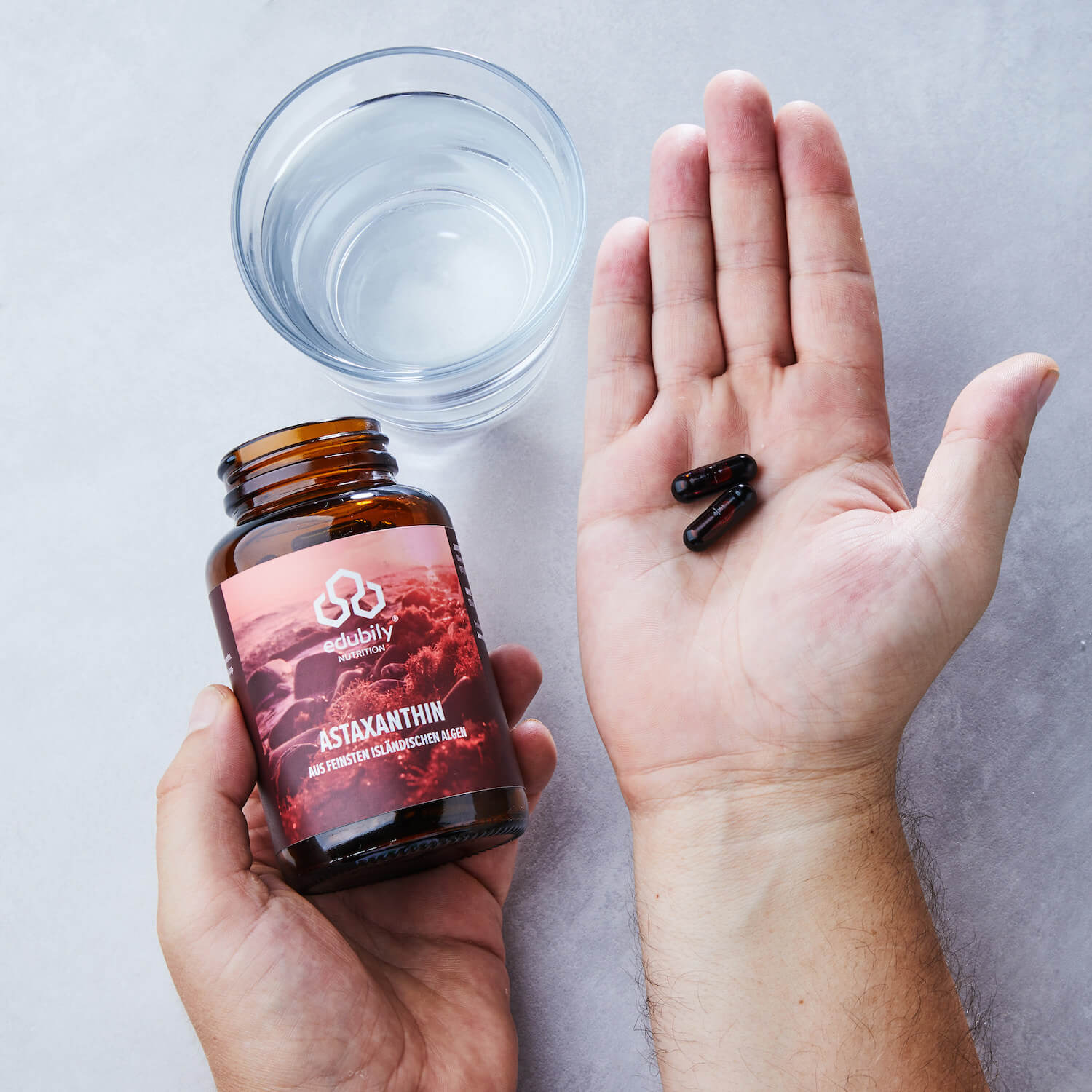
When you purchase our astaxanthin, you can be sure that it contains no unwanted accompanying substances. Our vegan capsules contain the maximum amount of 8 mg of astaxanthin permitted in the EU, dissolved in olive oil.
References
Chang, M.X. and Xiong, F. (2020). Astaxanthin and its effects in inflammatory responses and inflammation-associated diseases: Recent advances and Future Directions. Molecules, 25(22), p. 5342.
Nishida, Y., et al. (2007). Quenching Activities of Common Hydrophilic and Lipophilic Antioxidants against Singlet Oxygen Using Chemiluminescence Detection System. Carotenoid Science, 11, 16-20.
Si, P., & Zhu, C. (2022). Biological and neurological activities of Astaxanthin (review). Molecular Medicine Reports, 26(4). https://doi.org/10.3892/mmr.2022.12816
Yang, M., & Wang, Y. (2022). Recent advances and the mechanism of Astaxanthin in Ophthalmological Diseases. Journal of Ophthalmology, 2022, 1–11. https://doi.org/10.1155/2022/8071406
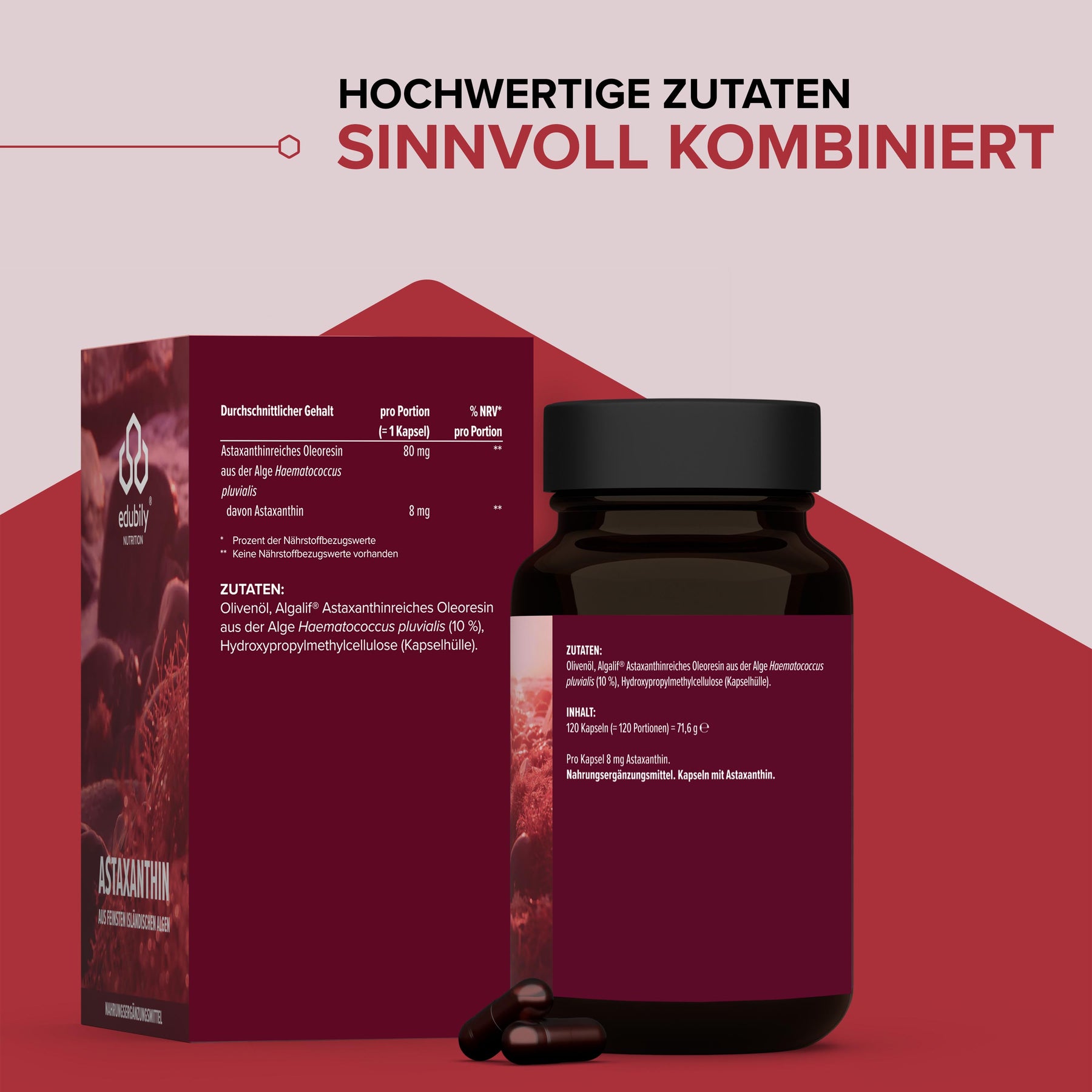
Durchschnittlicher Gehalt | pro Portion | % NRV* |
(= 1 Kapsel) | pro Portion | |
| Astaxanthinreiches Oleoresin aus der Alge Haematococcus pluvialis | 80 mg | ** |
| davon Astaxanthin | 8 mg | ** |
* Prozent der Nährstoffbezugswerte
** Keine Nährstoffbezugswerte vorhanden
Zutaten: Olivenöl, Astaxanthinreiches Oleoresin aus der Alge Haematococcus pluvialis (10 %), Hydroxypropylmethylcellulose (Kapselhülle).
VERZEHREMPFEHLUNG:
1 Kapsel täglich mit ausreichend Flüssigkeit einnehmen.
WICHTIGE HINWEISE:
Die angegebene empfohlene Tagesdosis darf nicht überschritten werden. Dieses Produkt ist kein Ersatz für eine ausgewogene und abwechslungsreiche Ernährung sowie eine gesunde Lebensweise.
Neben diesem Nahrungsergänzungsmittel sollten keine weiteren Astaxanthin-Ester enthaltenden Nahrungsergänzungsmittel am selben Tag verzehr werden. Nicht für Säuglinge, Kinder und Jugendliche unter 14 Jahre geeignet.
Außerhalb der Reichweite von kleinen Kindern aufbewahren.
Kühl, trocken und lichtgeschützt lagern.

Mit edubily® – Die Biochemie des Lebens verstehen
Mit dem Wissen aus der Biochemie wollen wir Menschen dabei helfen ihr volles Potential auszuschöpfen. Wir sind zwei Freunde, die es sich zum Ziel gesetzt haben, Menschen tiefe Einblicke in ihre Gesundheit zu geben. Wir wollen zeigen, dass es jedem von uns möglich ist, selbst etwas dafür zu tun, um möglichst lange gesund und fit zu bleiben. Aus unserer Sicht reicht es hierfür oft schon aus, wenn man bereit ist, Gesundheit verstehen zu lernen und sich gesund zu ernähren. Oft kommt es aber vor, dass in unserer modernen Ernährung wichtige Nahrungsstoffe fehlen. Deshalb liegt unser zweites Augenmerk auf der Entwicklung sinnvoller und vernünftiger, d. h., wirksamer Nahrungsergänzungsmittel.
Vielleicht auch interessant