Nutrition
Omega-3 Makes a Comeback
Omega-3 fatty acids are making a scientific comeback with mounting evidence for their benefits. New research reveals their power to support muscle recovery, enhance immune function, and protect brain health.
Nutrition
Omega-3 fatty acids are making a scientific comeback with mounting evidence for their benefits. New research reveals their power to support muscle recovery, enhance immune function, and protect brain health.
Line items
Once again: dead things often come back to life. In any case, omega-3 fatty acids—DHA and EPA—are enjoying a small renaissance.
Science is currently turning up increasingly positive findings about these essential (= vital) fatty acids, which have been lacking in Western diets for a long time. Today the situation has certainly eased somewhat, thanks to growing awareness and better access to these fats, plus the establishment of certain dietary trends. Consider: how many people regularly ate sushi 10 or 15 years ago?
In any case, there's very good news about omega-3. A recent study showed that muscles in COPD patients respond better to dietary protein when they consume 2 to 3.5 g of omega-3 daily (source). In other words: muscles become anabolic again. In illness, the body usually becomes catabolic—meaning it breaks down body protein, causing muscle loss and more. A vicious circle.
Omega-3 stops this. Next, the extremely prestigious Swedish Karolinska Institute demonstrated in a study of COVID patients from the pandemic's onset (2020) that omega-3 can dampen excess immune reactions ("cytokine storm"), inhibit the infamous microthrombosis formation (e.g., in the lungs), while simultaneously strengthening viral defense via phagocytosis and IFN1 signaling (source). So omega-3 achieves two goals at once.
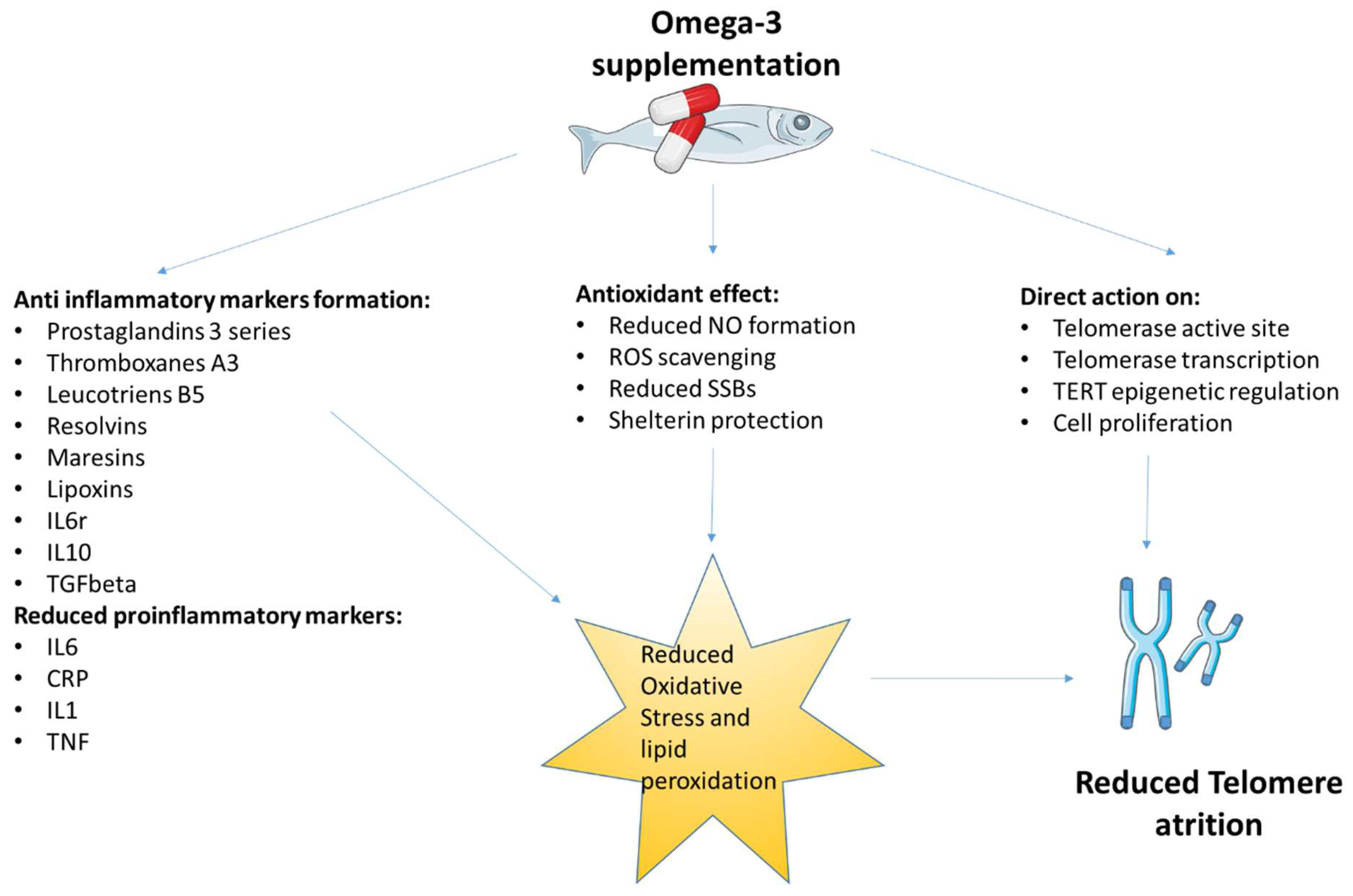
But that's not all. A new review has just appeared—essentially a summary of current research. Topic: omega-3 and longevity. There's evidence that omega-3 fatty acids preserve our chromosomes' protective caps, called telomeres. The age-related shortening of these protective caps is considered a driver of chronic disease development. How complex omega-3's effects are in this regard can be seen in a corresponding diagram in the study.
And indeed, another omega-3 study has just landed in our inbox—from William Harris, co-founder of the well-known Omega-3 Index. The researchers did something interesting: the team investigated the relationship between omega-3 fatty acid concentrations in red blood cells (Omega-3 Index) and MRI and cognitive markers of brain aging—and this was in relatively young participants. Additionally, the researchers examined omega-3's effects on the brains of genetically predisposed people carrying the known APOE4 allele, which raises their risk for dementia and more.
The findings can be summarized as follows:
You could say: low omega-3 in the body is a risk factor in itself. Interestingly, this is nothing new: the aforementioned William Harris has formulated it exactly this way in many studies.
Learn more about the Omega-3 Index here with us or in an interesting interview with William Harris himself on YouTube.
And apparently it's true: whenever you actually measure—for example, determining people's Omega-3 Index through blood testing—you notice how health-promoting these fatty acids are.
Speaking of the brain. For instance, this new study found that "higher DHA levels in the body are associated with greater selective and sustained attention, as well as better inhibitory capacity." Sounds complicated? Essentially, it means you can concentrate much better when you have more omega-3 in your body. Essential knowledge for intellectual workers—like students.
We can only repeat it: fish has been on the human menu for many thousands of years. Humans lived predominantly by rivers, lakes, and seas throughout our entire development. Consider: just a century ago, the Rhine was one of Europe's most important salmon rivers. For most people who don't know much about nutrition, omega-3 is almost certainly a missing link when it comes to health and healing.
Today it's relatively straightforward. Either you eat fatty fish occasionally (recommended, because it also contains iodine, selenium, taurine, etc.—think brain food). Or you get omega-3 fatty acids from high-quality (!) fish oil or algal oil. The latter is the vegan option and will be available from us in a few weeks. Stay tuned.